Quick answer
Europe offers English-taught bachelor’s, master’s and PhD programmes, often at a fraction of UK, USA or Australia costs. Germany and Italy are usually the most affordable, Ireland is the top English-speaking choice in the EU, France is strong for business, research and design, and Cyprus combines an EU degree with lower living costs.
Picture this: lectures in a Renaissance city on Monday, a weekend train to another country on Friday, and a degree recognised by employers around the world when you graduate. For thousands of students every year, that's what it means to study in Europe. And for Pakistani students in 2027, Europe is one of the best-value study destinations available.
Europe has world-ranked universities, English-taught programmes, low tuition at many public universities and real routes to work after graduation. The hard part isn't deciding whether Europe is worth it. It's picking the right country, university and course from all the options. This guide covers both.
Why Choose Europe for Higher Education?
1. World-class education at an affordable cost
Many European countries fund their public universities, so international students pay far less than in English-speaking countries elsewhere. Most German public universities charge no tuition, and Italian public universities set fees by family income. That makes Europe one of the most affordable places to study abroad for Pakistani families.
2. Globally recognised degrees
European universities follow the Bologna Process, so bachelor's, master's and doctoral degrees are structured and recognised in the same way across the continent. A European degree is respected by employers in Europe, the Middle East, North America and back home in Pakistan.
3. Thousands of English-taught programmes
You don't need to speak German, Italian or French to start. Universities across Europe offer English-taught programmes in engineering, computer science, business, data science, medicine, architecture and more. Learning the local language along the way is a big plus for part-time jobs and careers, though.
4. Work while you study, and after you graduate
International students in most European destinations can work part-time during their studies. After graduation, countries such as Germany, Ireland and Italy offer residence permits to stay on and look for work. These can lead to work permits like the EU Blue Card.
5. Scholarships and funded PhDs
From Italy's regional DSU scholarships to Erasmus Mundus joint master's degrees and salaried PhD positions in Germany, Europe has plenty of funding for strong applicants. Our scholarship team helps you find the ones that fit your profile.
Explore 33 European Countries: Languages, Traditions and Student Life
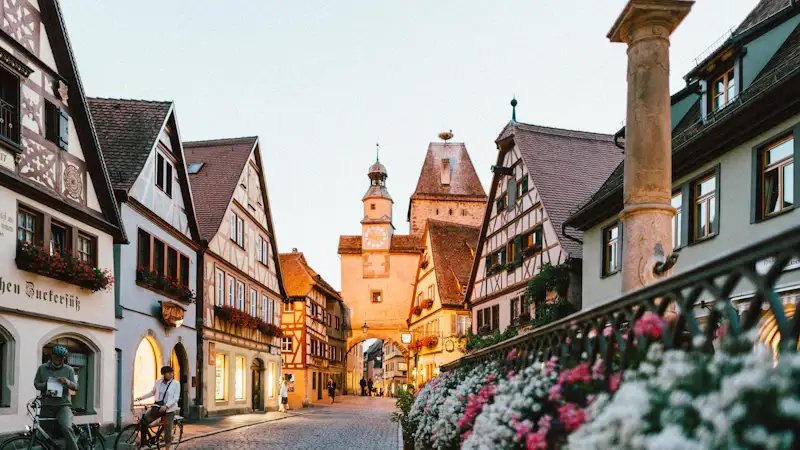
Studying in Europe means more than one country. You can explore 33 European countries, each with its own languages, food, festivals and student culture, often just a short train ride or budget flight away. In a single semester you could visit the canals of Amsterdam, the cafés of Paris and the Christmas markets of Germany.
That variety is part of the education. Living in a multicultural, multilingual setting builds adaptability, independence and a global network. Those are exactly the skills employers look for. Whether you want a big city like Milan or Dublin, or a quieter university town, Europe has a student life to suit you.
For a wider view of the region, see our Study in Europe overview.
Top Study Destinations in Europe for Pakistani Students
Here's a quick look at five of the most popular countries to study in Europe from Pakistan. Each one has a detailed guide on our website.
Study in Italy
Italy combines centuries of academic tradition with some of the lowest public university fees in Europe. Fees at public universities are linked to family income and often range from about €900 to €4,000 a year. Many Pakistani students also qualify for DSU regional scholarships, which can cover tuition and living costs. Italy is especially strong in architecture, engineering, design, fashion and business. Graduates can apply for a job-seeking residence permit of up to 12 months.
Read our complete Study in Italy guide →
Study in France
France is home to leading business schools, research institutes and the famous grandes écoles. From the 2026–27 academic year, most non-EU students at French public universities pay about €2,895 a year for a bachelor's and €3,941 for a master's. That's still far below what similar programmes cost in the UK or USA. France is a great choice for business, management, hospitality, fashion, engineering and research-focused master's and PhD study.
Read our complete Study in France guide →
Study in Germany
Germany is Europe's engineering and technology powerhouse. Most public universities charge little or no tuition, and students pay a small semester contribution instead. Germany is ideal for engineering, computer science, the natural sciences and funded PhD research. After graduating, international students can get a job-seeking residence permit of up to 18 months, then move on to an EU Blue Card or skilled-worker permit.
Read our complete Study in Germany guide →
Study in Ireland
Ireland is the top English-speaking country in the EU and the European base of global tech, pharma and finance companies. Ireland's Stamp 1G post-study permission gives graduates 12 months after an honours bachelor's, and up to 24 months after a master's or PhD, to work full-time and find a graduate job. Ireland suits students in IT, data analytics, business, finance and the life sciences.
Read our complete Study in Ireland guide →
Study in Cyprus
Cyprus is an EU member state with English-taught programmes, a Mediterranean lifestyle and a lower cost of living than much of Western Europe. Admissions are straightforward and intakes are flexible, which makes Cyprus a popular entry point for students who want an EU degree on a tighter budget. Popular subjects include business, hospitality and tourism, computer science and health sciences.
Read our complete Study in Cyprus guide →
Europe study destinations at a glance
| Country | Public tuition (non-EU, approx.) | Teaching language | Post-study stay-back | Best known for |
|---|---|---|---|---|
| Italy | €900–€4,000/yr (income-based) | Italian + many English programmes | Up to 12 months | Architecture, design, engineering, business |
| France | €2,895 (bachelor's) / €3,941 (master's) per year | French + many English programmes | Job-search permit for eligible graduates | Business, research, fashion, hospitality |
| Germany | Little or no tuition + semester fee | German + many English master's | Up to 18 months | Engineering, IT, sciences, funded PhDs |
| Ireland | Varies by university and course | English | 12 months (bachelor's), up to 24 months (master's/PhD) | Tech, data, business, pharma |
| Cyprus | Varies by university and course | English | Ask our advisers about current rules | Business, hospitality, IT, health sciences |
Figures are approximate, based on public universities, and may change. Always confirm current fees and visa rules with the university and the relevant embassy, or ask an IEN adviser.
Also considering Canada? Canada isn't in Europe, but many students compare it with European options. Canada is known for high-quality colleges and universities, co-op programmes that build work experience into your degree, and a Post-Graduation Work Permit (PGWP) of up to three years for eligible graduates. Study permit places are now capped, so plan early. Explore our Study in Canada guide →
Study in Europe by Degree Level: Bachelor's, Master's and PhD
Bachelor's in Europe
Bachelor's degrees in Europe usually take 3 years (4 in Ireland and some programmes). After FSc, A-Levels or an equivalent qualification, Pakistani students can choose from English-taught bachelor's programmes in Italy, Cyprus, Ireland, France and Germany. Some German universities may first require a one-year foundation course (Studienkolleg) or extra years of study, depending on your qualifications. Italy and Cyprus are popular for affordable undergraduate study.
Master's in Europe
A master's in Europe is the most popular route for Pakistani graduates. Most programmes last 1 to 2 years. They are widely taught in English and usually cost much less than a master's in the UK or USA. Ireland offers fast 1-year master's degrees with up to 24 months of stay-back. Germany and Italy offer low-cost 2-year master's degrees. France is excellent for business and research-led programmes.
PhD in Europe
A PhD in Europe usually takes 3 to 4 years. In many countries, especially Germany, doctoral candidates are often employed as research staff and paid a salary rather than charged tuition. Italy, France and Ireland also offer funded doctoral positions and scholarships. A strong research proposal and the right supervisor match are key, and IEN can help you prepare both.
How to Choose the Right Study Destination in Europe
With so many good options, the "best" country to study in Europe is the one that fits you. Ask yourself:
- What is my total budget? Include tuition, living costs and the funds you must show for your visa.
- What do I want to study? Some countries are stronger in engineering, others in business, design or health sciences.
- Do I want an English-speaking country, or am I open to learning a new language?
- What are my career plans? Compare part-time work rights, post-study stay-back and job markets in your field.
- Am I eligible? Check academic grades, gaps, English test scores (IELTS or PTE) and entry requirements.
- Which scholarships can I realistically get? Funding can completely change which destination is most affordable.
Weighing these factors across several countries and hundreds of universities is a lot to do alone. That's exactly why students work with an experienced study abroad consultant.
How IEN Helps You Choose the Right Higher Education Destination in Europe
Since 2009, IEN (International Education Network) has helped Pakistani students from our Lahore office study at partner universities around the world. Here's how we help you plan your move to Europe:
- Profile assessment and destination matching: we compare countries against your grades, budget, subject and career goals, so you choose with confidence.
- University admissions: shortlisting, applications, personal statements and SOPs, and securing your offer.
- Scholarship guidance: finding and applying for university, government and DSU-type scholarships.
- Student visa support: document checks, financial evidence, interview preparation and filing.
- IELTS and PTE preparation: help with the scores your chosen universities require.
- Accommodation and pre-departure: housing, travel planning and arrival briefings so you land ready.
Start Your Study in Europe Journey Today
Italy's history, France's business schools, Germany's engineering, Ireland's tech hub, Cyprus's Mediterranean lifestyle: Europe has a destination for every ambition and budget. The sooner you start planning, the more universities, intakes and scholarships you'll have to choose from.
Explore our 25+ study destinations, read more on the IEN blog, or check official programme listings on the European Commission's Study in Europe portal. When you're ready, book your free consultation with IEN and take the first step towards your European degree.
Frequently asked questions
Can Pakistani students study in Europe in English?
Yes. Italy, France, Germany, Ireland and Cyprus all offer English-taught bachelor’s, master’s and PhD programmes. Ireland and Cyprus teach mainly in English. Italy, France and Germany have a large and growing number of English-taught degrees, especially at master’s level.
Which is the cheapest country to study in Europe for Pakistani students?
Germany and Italy are usually the most affordable. Most German public universities charge little or no tuition (students pay a semester contribution). Italian public universities set fees according to family income, often between about €900 and €4,000 a year, with regional DSU scholarships available.
Can I work in Europe after completing my degree?
Most European destinations offer post-study options. Germany gives graduates up to 18 months to look for work. Ireland’s Stamp 1G gives 12 months after an honours bachelor’s and up to 24 months after a master’s or PhD. Italy offers a job-seeking residence permit of up to 12 months.
Is IELTS required to study in Europe?
Most universities ask for proof of English, usually IELTS, PTE or TOEFL. Some accept other evidence, such as an English-medium instruction letter, depending on the programme and country. Our test prep team can advise you.
How can IEN help me choose a study destination in Europe?
IEN compares destinations against your academic profile, budget and career goals. We shortlist universities, prepare your applications, help with scholarships and handle your student visa file. The first consultation is free.
Written by
IEN Education Team
Student counsellors, Lahore head office
Counsellors at IEN — International Education Network, advising students from its Lahore head office since 2009.
Country guide
Study in Europe from Pakistan →
Prefer to talk in person? Visit our Lahore head office in Gulberg, or book a free consultation.
